
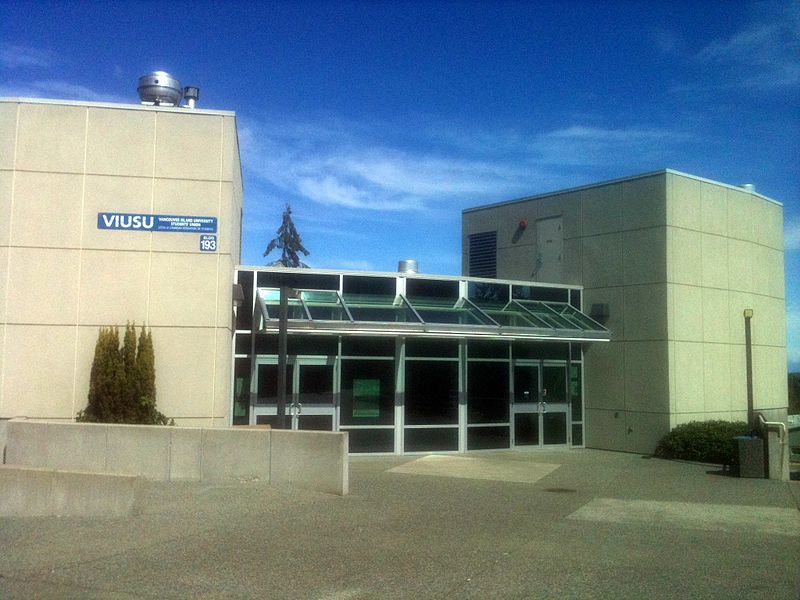

Several researchers at Vancouver Island University are studying the impact of blue-green algae they say has been proven to be extremely hazardous to human and animal life.
According to Dr. Chris Gill and Lucas Abruzzi, the algae known as cyanobacteria can produce potentially deadly toxins harmful to human and animal health.
Gill says they’re still researching, but from what he can determine the algae has become more apparent due to increases in global warming and it continues to spread.
“The prevalence of these blooms has increased, and they threaten access to safe drinking water supplies as well as recreational opportunities across Canada,” he says. “The risk to human health is significant; dogs and wildlife have died from the effects of water contaminated with these toxins.”
Currently, tests are conducted for three different classes of cyanotoxins including microcystims, nodularin and anatoxins, and Gill says traditional testing measures are extremely expensive leaving many areas to do a more cost-effective less reliable approach.
“So many jurisdictions rely on less reliable techniques such as cell counts and visual observation of blooms to protect public health,” he says. “Without measuring toxins directly, closures could occur unnecessarily in waterbodies with safe levels of toxins.
“More importantly, unsafe toxin levels could be missed, leading to potential human or animal exposure.”
Gill’s research includes developing a paper mass spectrometry method, where a water sample is transferred to a strip of paper and introduced for measurement. He says results are produced in the first two minutes without sample preparation.
“Results are obtained in two minutes, as compared to 30 minutes per sample for conventional techniques which also require extensive preparation,” he says. “The method also offers the potential of drying samples collected at remote sites, which can be dried and shipped for analysis.”
According to VIU several lakes on Vancouver Island have already seen increased levels cyanobacteria blooms, and can be closed for months including Elk Lake, Thetis Lake and Prior Lake, Gill says just because you don’t see any algae that doesn’t mean it’s not present.
“Most of our drinking water is relatively unthreatened in BC, but if you move inland to Alberta, Saskatchewan and Manitoba, their drinking water often comes from shallow lakes,” he says. “Shallow lakes are a great place for algae to grow.”
VIU labs have been developing methods to measure increased algae levels for the past three years, and Gill says part of his goal is to develop methods to miniaturize the technology so it can go where conventional methods can’t.